A browser‑based voice authoring app that lets a contact‑centre team source, quality‑check, and export telephony‑grade IVR/IVA prompts in‑house, the same day a need is identified — no vendor, no budget approval, no wait. Now at version 1.1 — fully self‑serve: each user brings their own voice (ElevenLabs) and translation (DeepL) keys.
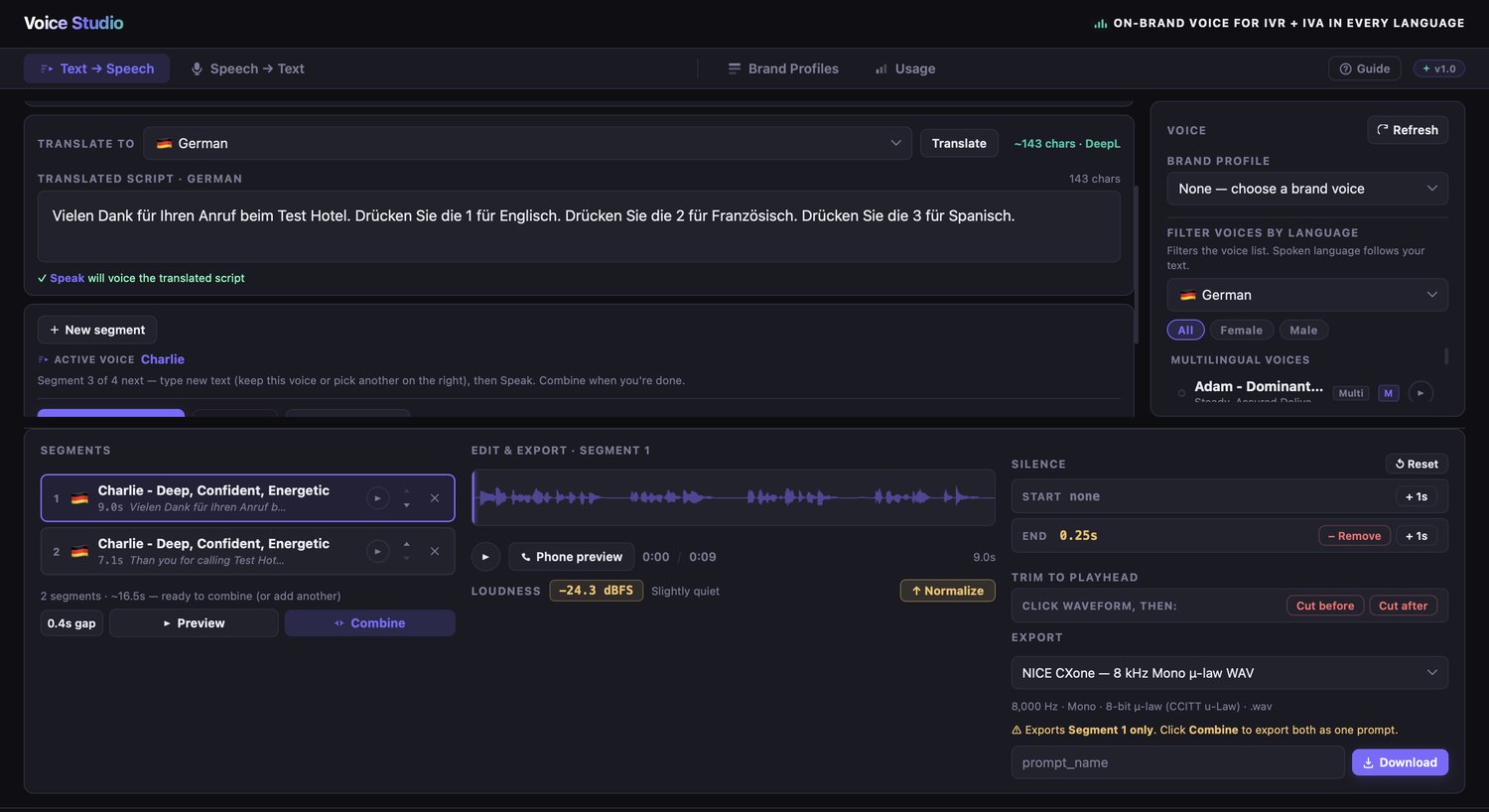
Voice Studio 1.1 — authoring a hotel IVR prompt in-browser: brand voice, DeepL translation to German, multi-segment editing, and a ready-to-ship NICE CXone telephony export.
Authors and QAs prompts with text‑to‑speech, then exports in the CXone/NICE telephony format ready for the call flow.
Imports existing IVR recordings (WAV, MP3, FLAC) as editable material — turning "create new" into "maintain the whole prompt library."
Generates prompts in 15+ languages — built‑in DeepL translation, multilingual text‑to‑speech, and automatic language detection — spanning Latin American Spanish, Arabic, Mandarin, Turkish, and Malay.
Precise trimming with click‑free fades, multi‑segment editing that assembles in recording order, and a working‑folder prompt library that saves straight to disk.
Pronunciation tuning — teach names & terms how to sound (Marriott → "Marry‑it"), per language and per brand, without touching the script.
Compare voices — audition a line across several voices side by side, then commit the best.
Built solo as a self‑contained app — bring‑your‑own keys, zero new infrastructure, runs on free tiers — matured from alpha through preview to a shipped 1.1.
Product Manager & Builder · AI intake → PM command center
What began as a single‑purpose JIRA intake tool I built for day‑to‑day product work has grown into a self‑contained Product Manager command center — one portable app that pulls a team's daily product workflows into a single interface. The AI intake engine still turns a form, email, or PDF into a ready‑to‑review JIRA Epic and Stories; around it now sit a live JIRA dashboard, a two‑sprint map, automated health checks, and a release‑notes publisher — so the question “what needs my attention right now?” is answered at a glance, with the ability to act on it in place.
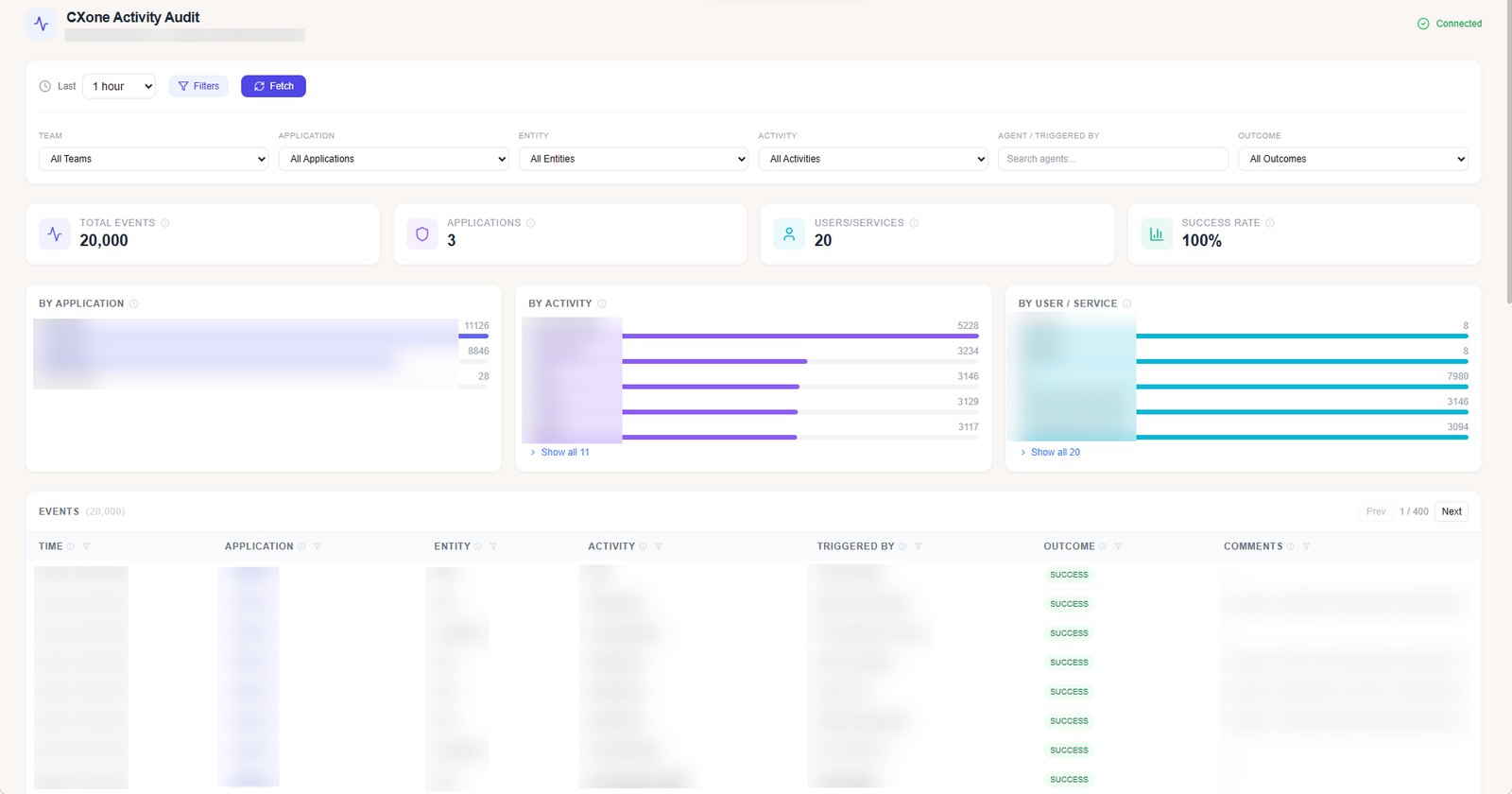
New in v1.1 — the Activity‑Audit Console (CXone): security‑and‑operations audit over 20,000+ events in seconds, self‑service filters, and instant surfacing of failed logins, API‑key usage and access events. v1.0 (up from v0.85) built the command center shown below: live dashboard & metrics, sprint map, JIRA health checks with one‑click fixes, a release‑notes publisher, and a workspace that remembers how you arranged it.
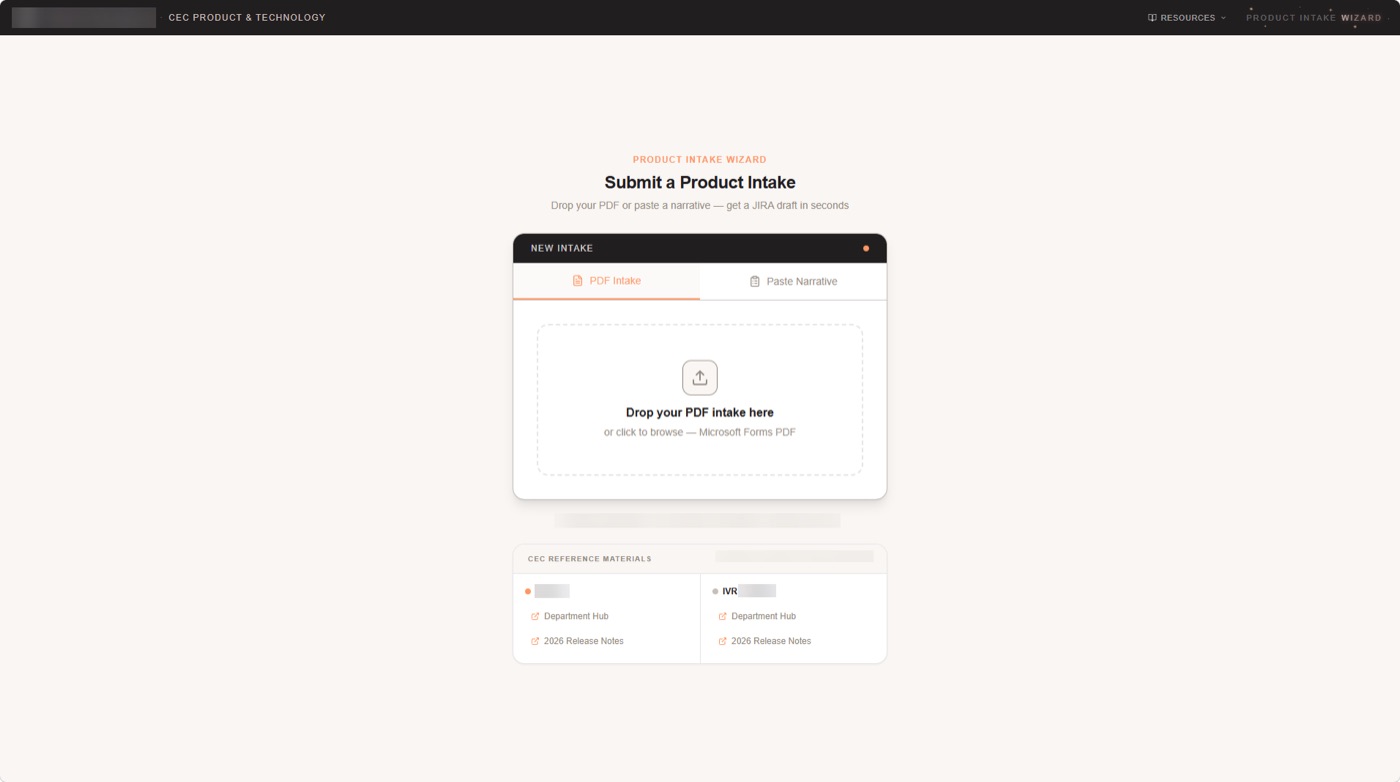
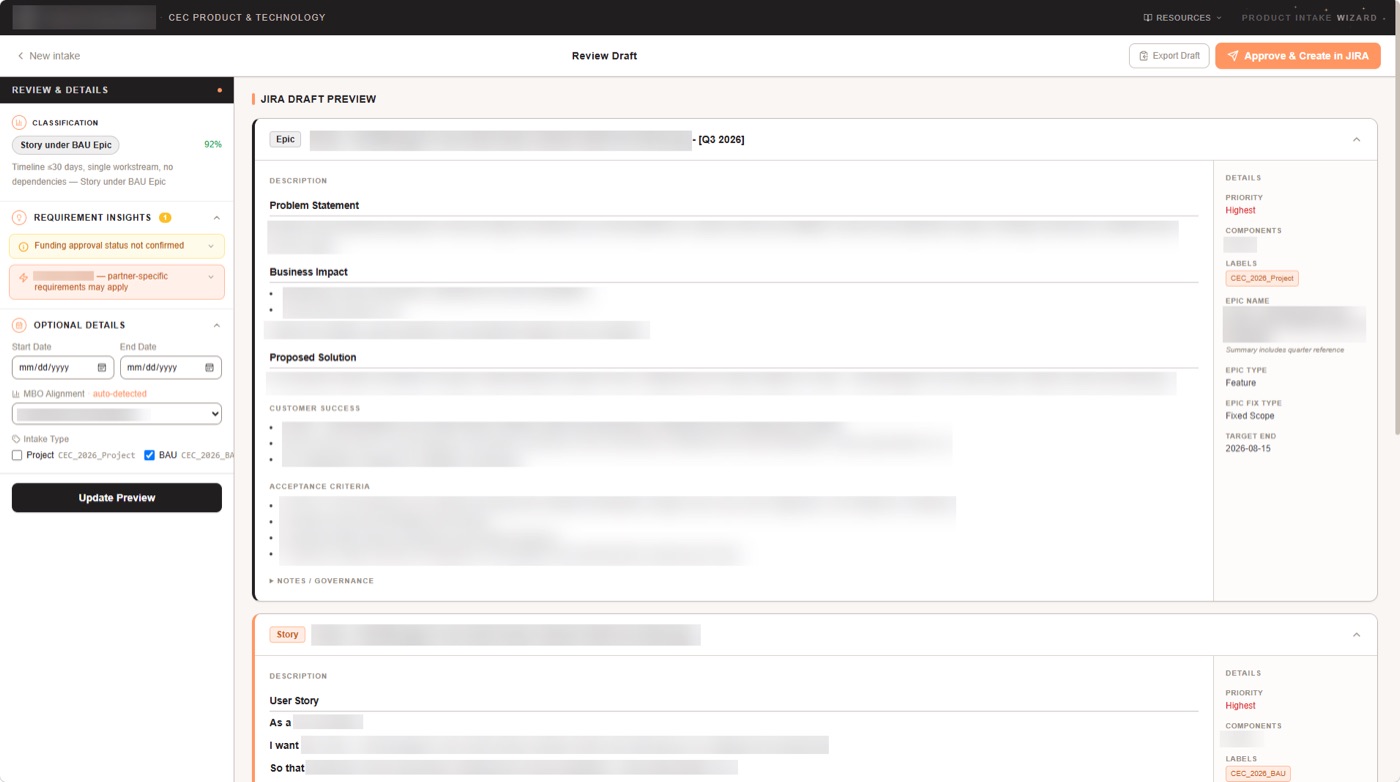
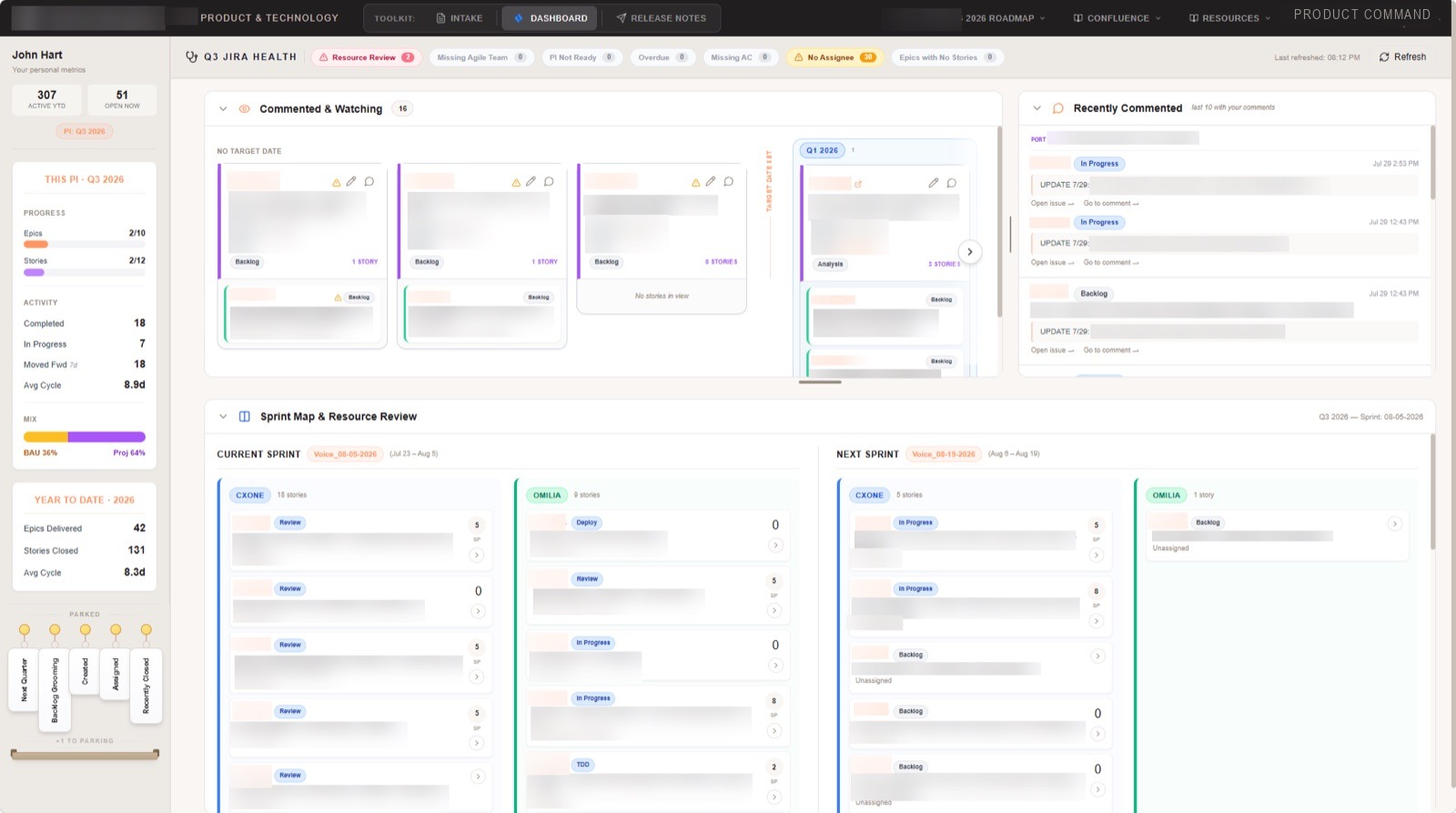
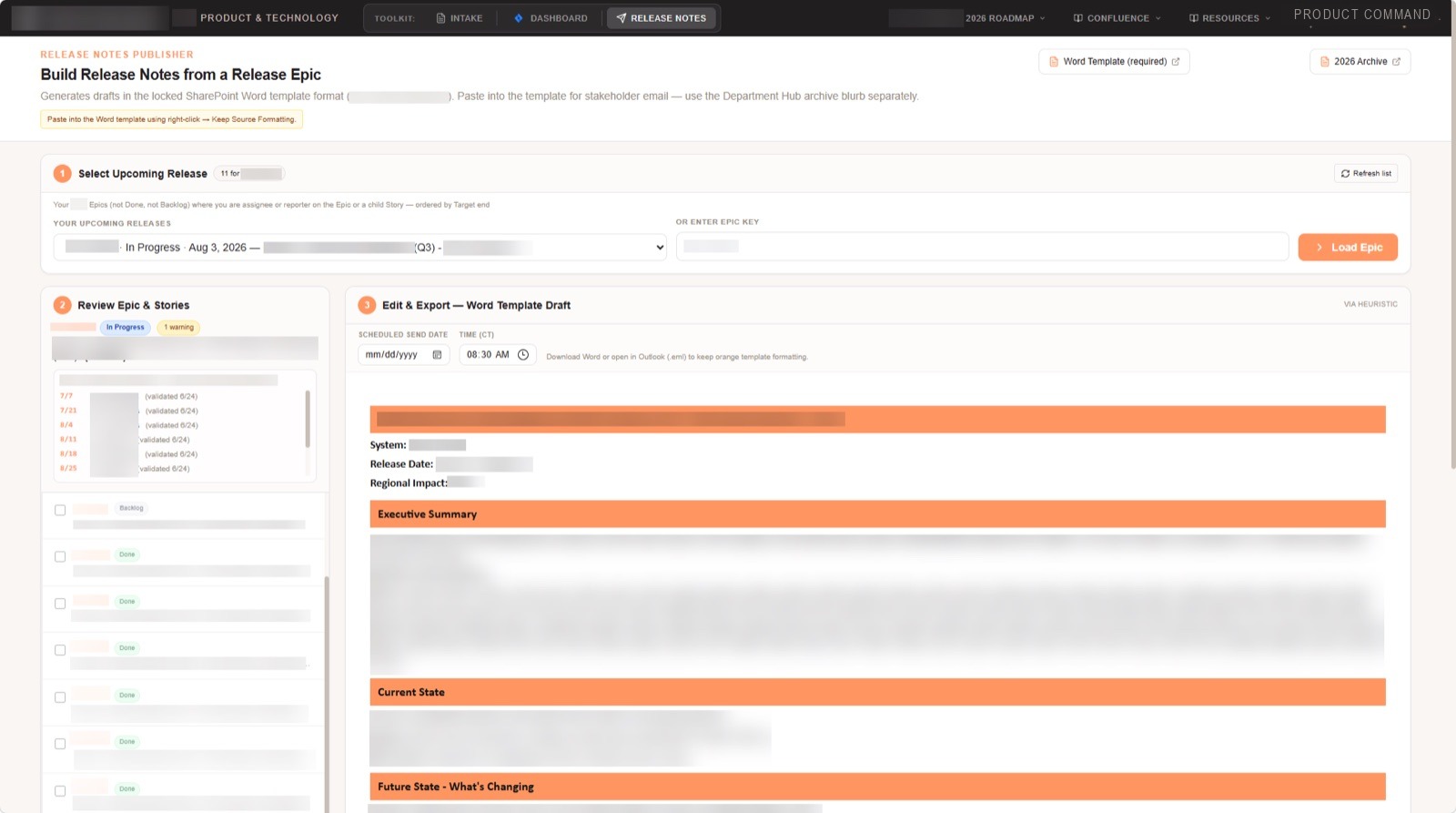
Where it started — submit an intake. Drop a completed intake PDF or paste an email/narrative. The engine reads it and drafts the rest; no formatting required.The JIRA draft preview — an Epic and Story with Problem Statement, Proposed Solution, User Story & Acceptance Criteria written for you, every field pre‑populated. Review, edit inline, then Approve & Create in JIRA.Where it is now — the command center. A live JIRA dashboard: a personal metrics scorecard, health checks across the board, and a two‑sprint map with status‑ranked cards. Reorder, resize, or park any section — the layout persists.The release‑notes publisher — pick a release Epic, review its Stories, and export a ready‑to‑send draft in the locked template format. From intake all the way to shipping notes, without leaving the portal.Security & operations, on demand — the Activity‑Audit Console (CXone). Pulls 20,000+ platform audit events in seconds where the native report times out, then makes them self‑service: filter by team, agent, application, activity and outcome, and surface the security‑relevant events — failed logins, API‑key usage, recording access, admin changes — instantly.
Intelligent intake engine — the original job, still here: a form, email, or PDF becomes a ready‑to‑review JIRA Epic and Stories. The AI reads the intake, classifies it (Epic‑with‑Stories, BAU, or Research), drafts every field, and one click publishes the whole linked hierarchy — components, labels, Agile Team, Planned PI — correctly formatted every time.
Real‑time JIRA dashboard — a personal metrics scorecard (active YTD, open now, PI progress, average cycle time, BAU/project balance) over a live REST‑API connection, plus Commented & Watching, Recently Commented, backlog grooming and recently closed — each section drag‑to‑reorder, resizable, and collapsible.
Sprint map & resource review — the current and next sprint side by side, stories grouped by component and ranked so the closest‑to‑done surface first, with in‑app status transitions (Backlog → To Do → In Progress → Review → Deploy) — no trip back to JIRA.
Automated health checks — seven dimensions at a glance (missing acceptance criteria, no assignee, overdue, epics with no stories, PI readiness…), each with one‑click fixes executed straight against JIRA.
Release‑notes publisher — build release notes from a release Epic, review the Stories, and export a ready‑to‑send draft in the locked template format.
A workspace that remembers — reorder, resize, pair side‑by‑side, or “park” sections on a coat rack to reclaim room; the layout persists across sessions, per person.
Activity‑Audit Console (CXone) — a security‑and‑operations view built into the same portal. It pulls 20,000+ platform audit events in seconds — where the native report times out — and makes them self‑service: filter by team, agent, application, activity and outcome; surface the security‑relevant events (failed logins, API‑key usage, recording access, admin changes) instantly; and answer an access or compliance question on demand, without a hand‑written script or a ticket.
Incident intelligence via Biggy (in preview) — an integration with Biggy, BigPanda’s AI incident assistant, that pulls incident work into the same portal: plain‑language search across JIRA and ServiceNow, a Major‑Incident panel that turns an incident into a pre‑filled product intake in one click, cross‑system “swarm” investigation, and duplicate / related‑work detection before a draft is published. Built and demo‑ready today — it goes live the moment a Biggy API key is added in Settings.
Built as product owner, end to end — a React 18 + TypeScript front end and a Python FastAPI back end, portable and self‑contained (no database beyond JIRA API access). And the PM still stays in control: nothing reaches JIRA without review and sign‑off.
Game & BrandLouisLouisLoungerLoungerCreator · Design, Build & Brand
the real Louis
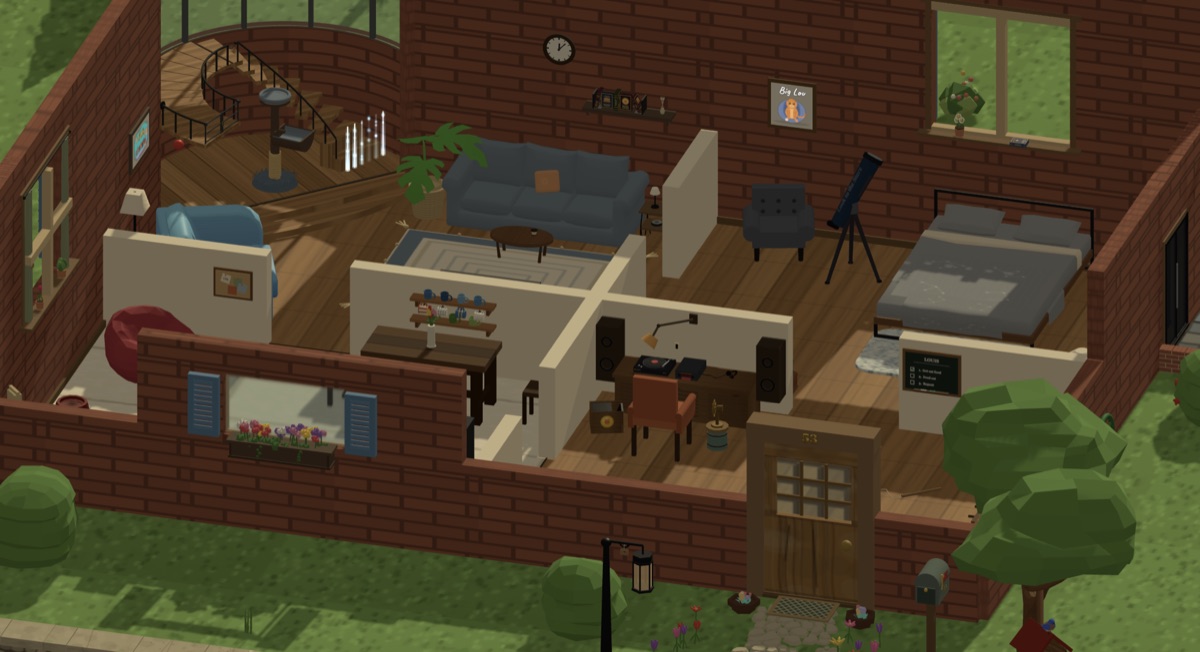
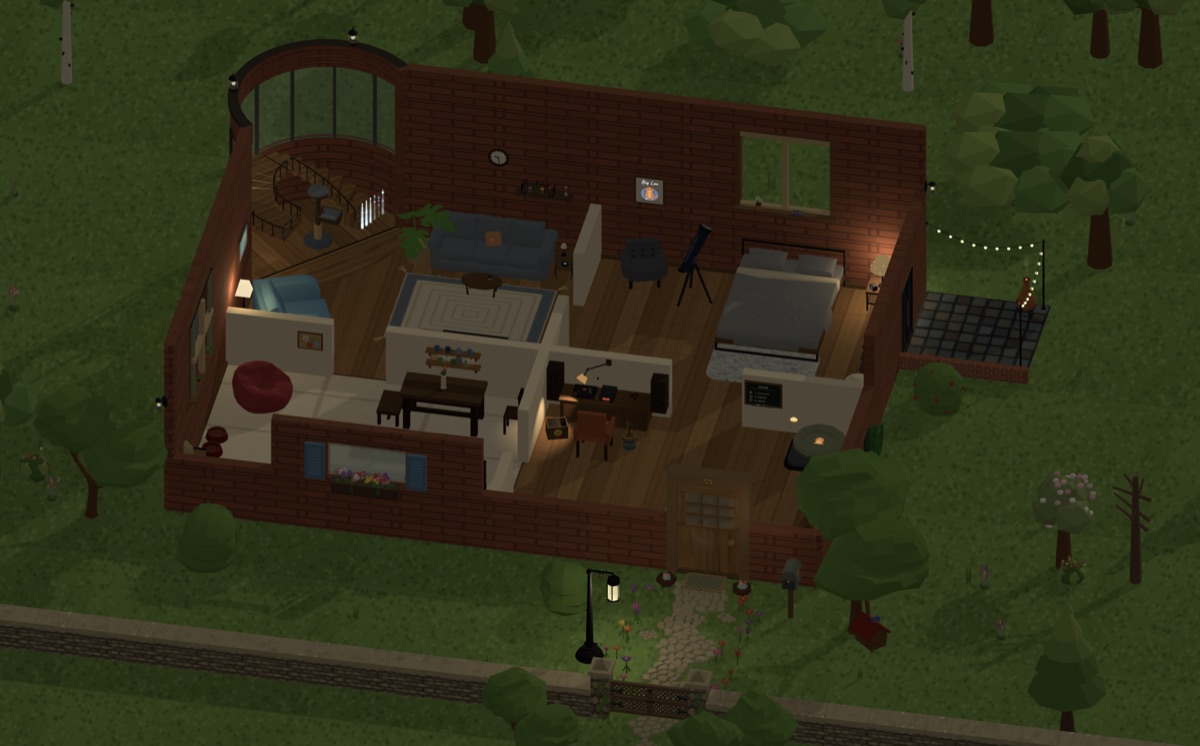
Louis isn't just a cat — he's an attitude: the patron saint of lounging, where comfort is a quiet flex. Louis Lounger turns that worldview into a cozy‑competitive cat game — claim the comfiest (and most forbidden) spots, keep your people fond of you, and out‑laze your rivals from Stray all the way to His Royal Loafness. A family passion project run like a real product: a full brand foundation, a shipped & playtested 1.0, and an isometric 3‑D build now in preview.
Louis's Home — the isometric low‑poly 2.0 build. Comfort guaranteed.Day to Night — a wider view of the same build and detail at night.
Built the brand & IP foundation — positioning, voice, and a comic franchise — with a phased strategy that grows the IP before chasing an audience.
Designed the game end to end — a comfort‑and‑approval core loop, a layered economy, hero loadouts, and “cozy, not cruel” sabotage — captured in a full design brief, economy spec, and roadmap.
Shipped LL 1.0 as a self‑contained vanilla‑JS build, then playtested it and used the session data to validate the core question — is chasing the comfort fun? — before scaling.
Ran it like a product: prioritized the roadmap, cut a true MVP, and phased the build to prove the fun first and de‑risk the hard tech (netcode) last.
Now building LL 2.0 — an isometric low‑poly 3‑D build (Three.js → Godot 4) with a teaser site — porting the validated 1.0 systems into the new engine.
Shipped Alpha 2.1 — a hidden basement “second act” with its own reward loop and a new cozy spot, plus a real Comfort Codex that turns earned spots, titles, and achievements into a permanent progress record — with movement and feel unified across the whole home.
LL 1.0 shipped · LL 2.0 now at Alpha 2.1 in private previewSee the build ↗
Game & BrandCreator · Design, Build & Brand
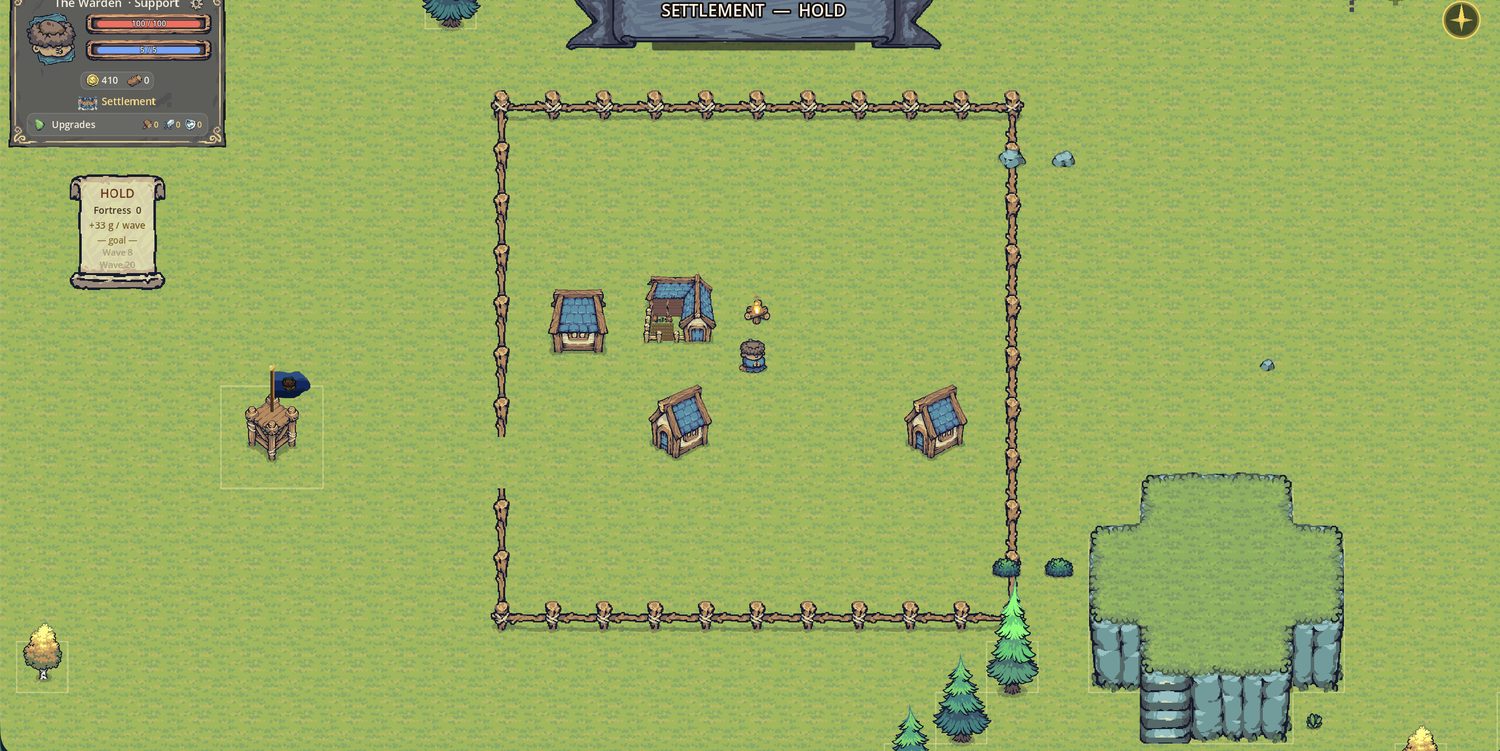
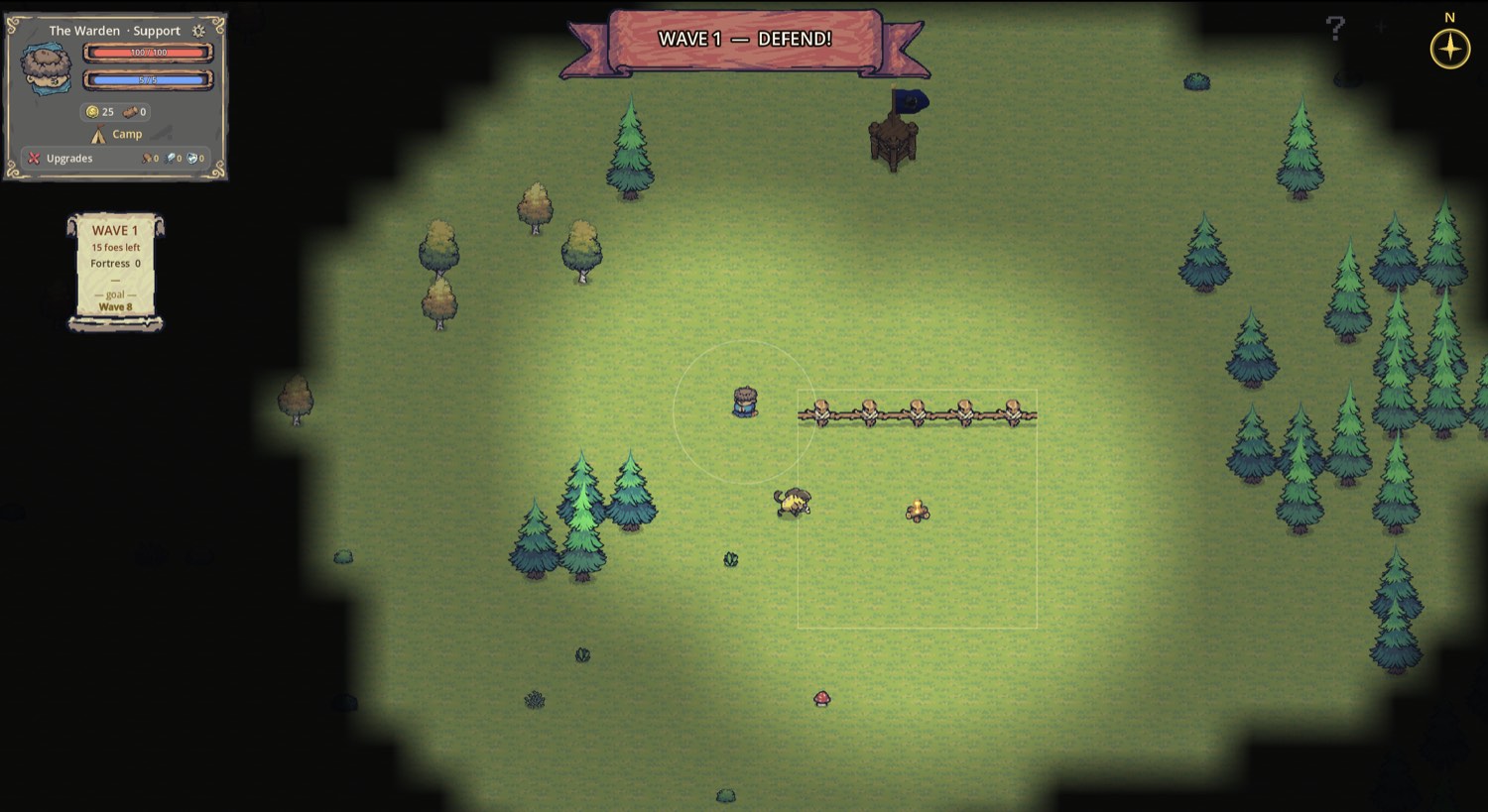
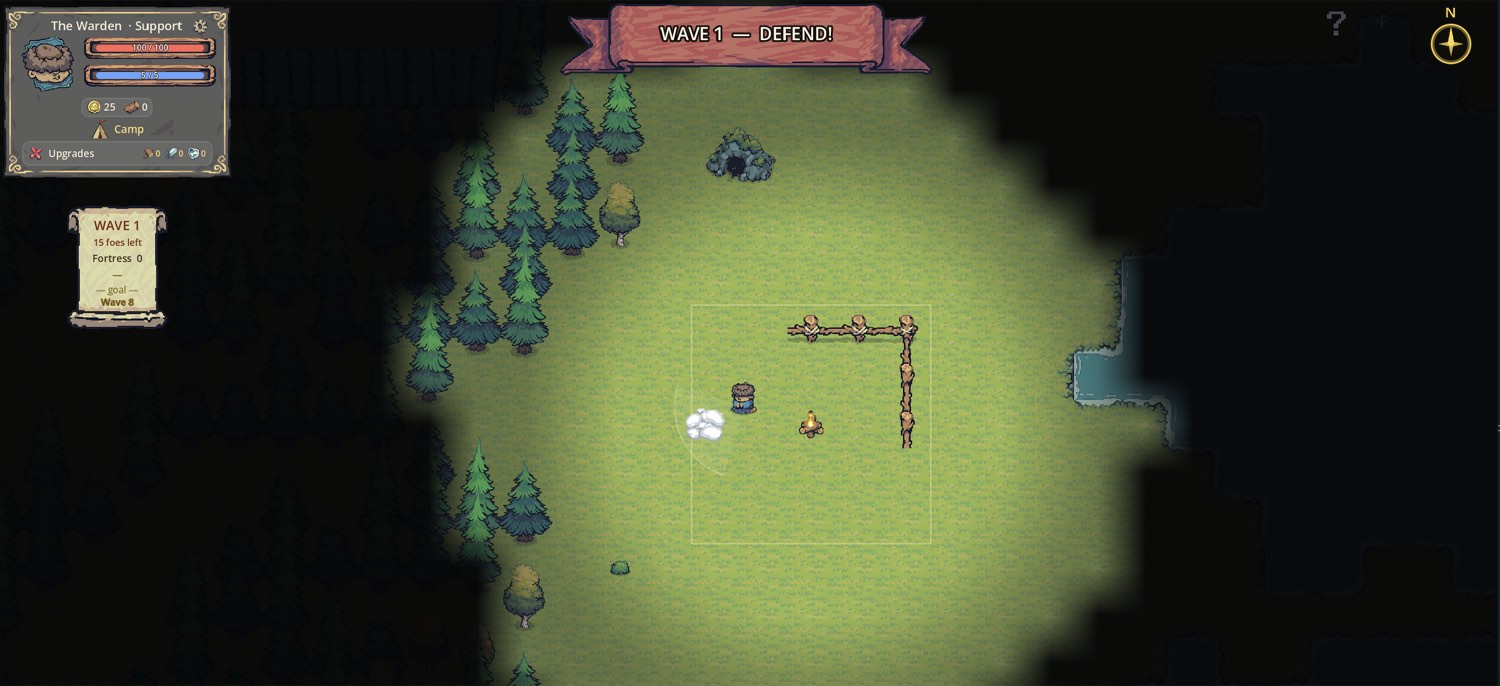
4TRESS is a top‑down fortress‑defense game about holding a lone campfire against the dark. Survive a wave and your territory expands outward in rings — more room to build, but more perimeter to defend; between waves, one timed prep window to lay walls by hand, buy upgrades, and scout the fog before the next wave rushes in. It all plays out on a large, procedurally‑generated world — grass, forests, rivers, and cliff‑edged plateaus, a different place each run. Built solo in Godot 4 and run like a product — every version is scored against a written “is it fun?” hypothesis, playtested against checklists, and logged; the craft is in the loop, not just the features.
“Wave Craft” — at each settlement milestone you drag out your own wall frame and set it around the campfire; the walls cut cleanly around water, rock, and trees, so the base takes the shape of the land. Placeholder‑to‑final art from the licensed Tiny Swords pack; the world, structures, and composition are the game’s own.
The real in‑game HUD, mid‑build — hero card, resources, camp & upgrades, and a goal tracker counting toward Wave 8 — as the first wall goes up beside the campfire and the fog holds back the dark.Fog of war reveals the world in organic shapes — here a lake at the frontier — while you close a walled corner around the fire before the wave rushes in.
Designed the core loop around one testable sentence — expansion must feel like a mixed blessing, and spending must create real regret — then built the smallest game that could prove or break it.
“One World” — the biggest structural leap: the whole prepare → survive → expand → spend loop moved off a flat prototype grid onto a real, procedurally‑generated world, and shipped the game’s first full interface (hero card, build menu, compass, goal tracker). Enemies navigate the terrain, fog reveals it in organic shapes, and waves gather out of sight before they rush the camp.
A world that fights back: buildings you can inspect and repair, structures that catch fire in stages and collapse into rebuildable rubble when overwhelmed, and real depth you move through — you pass behind the tall trees and in front of the low rocks.
“Wave Craft” — a ground‑up rework of pressure: waves now spawn at the fog’s edge and change shape through a director that presses toward wherever your line last broke, while enemies spread out instead of stacking into a rank you can clear in one swing — and you hand‑place your own wall frame at each settlement milestone.
Deliberate building — an opt‑in build mode with ghost previews and phase‑gated construction, redesigned mid‑alpha after playtests caught accidental wall purchases at wave edges.
Run as a deliberately process‑heavy build in small, internally‑versioned milestones (currently v0.16.0 “Wave Craft”), each scored against a written “is it fun?” hypothesis and logged before the next system ships — a public release is still ahead.
Game DesignGodot 4GDScriptProcedural WorldsSystems & EconomyPlaytestingBrand SystemSVG / Illustration
Web Designer & Builder · Site, AI Concierge & Client Portal
A compliance‑first real‑estate website with Wren — a local‑savvy AI home concierge — built for an independent brokerage. Most realtor sites run on the same rented template; this one is the exception: a bespoke design system, and a concierge grounded in a knowledge base verified line by line. No registration walls. No password to see a house. Answers at 2am.
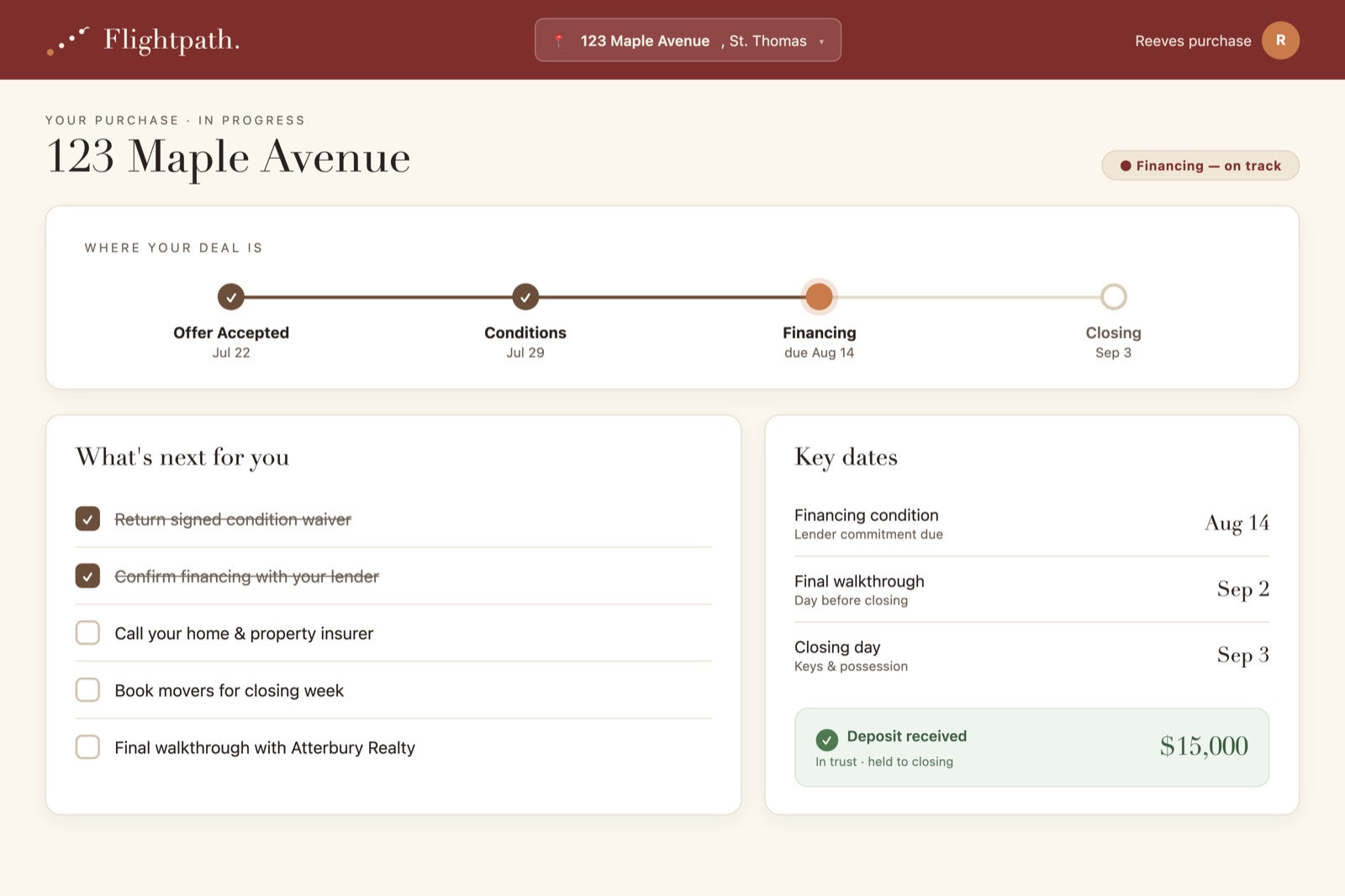
The home page — a warm, editorial real‑estate site with its own design language: a serif headline over a cream‑and‑maroon palette, built to feel nothing like a rented template.Flightpath — the private client dashboard: one live deal tracked end to end — timeline, tasks, key dates, and the deposit held in trust. Sample data shown.
Wren knows the town street by street — a local gazetteer lets her place a named street or address in its part of town next to a landmark ("the south side, near Lake Margaret and Pinafore Park"). For a street she doesn't know, she says so and defers — she never guesses a wrong neighbourhood. It's the difference between a concierge and just another chatbot.
Refuses to guess on anything high‑stakes — no home valuation, no commission rate, no legal, tax, or financial advice. She calibrates her own certainty and hands off to the agent rather than risk a confident‑but‑wrong answer on a five‑figure decision.
Won't steer or profile — she'll tell you where a neighbourhood or school is, but never rates it or profiles who lives there, and never quietly favours one kind of buyer over another. Fair housing, built into how she answers.
Teaches the process from dated facts — buying, selling, closing costs, HST on new builds, land‑transfer tax, down payments, conditions — every claim dated and "as‑of," with the accuracy guarantees enforced in code, not just asked for in a prompt.
A passwordless client portal — email‑OTP sign‑in and per‑client dashboards that track a live deal end to end: timelines, task checklists, key dates, and deposit status — a "where's my deal at?" view, on its own isolated database.
Compliance built in, not patched in later — designed around Ontario's RECO / TRESA rules and PIPEDA: verbatim disclaimers, consent at lead capture, data minimization and retention limits, and a standing red‑team suite that runs on every deploy as a release gate.
Built on the same concierge frame as Iris and the Card Curator — one canonical, version‑controlled platform, dressed head‑to‑toe for the brokerage.
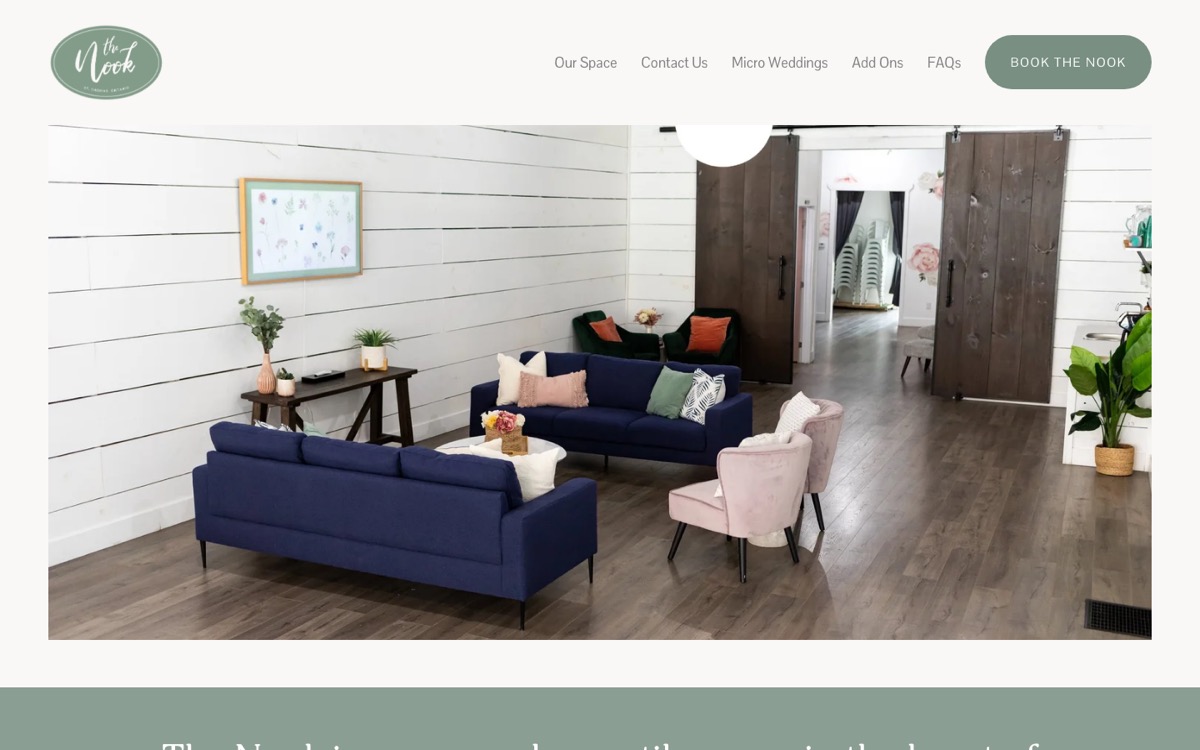
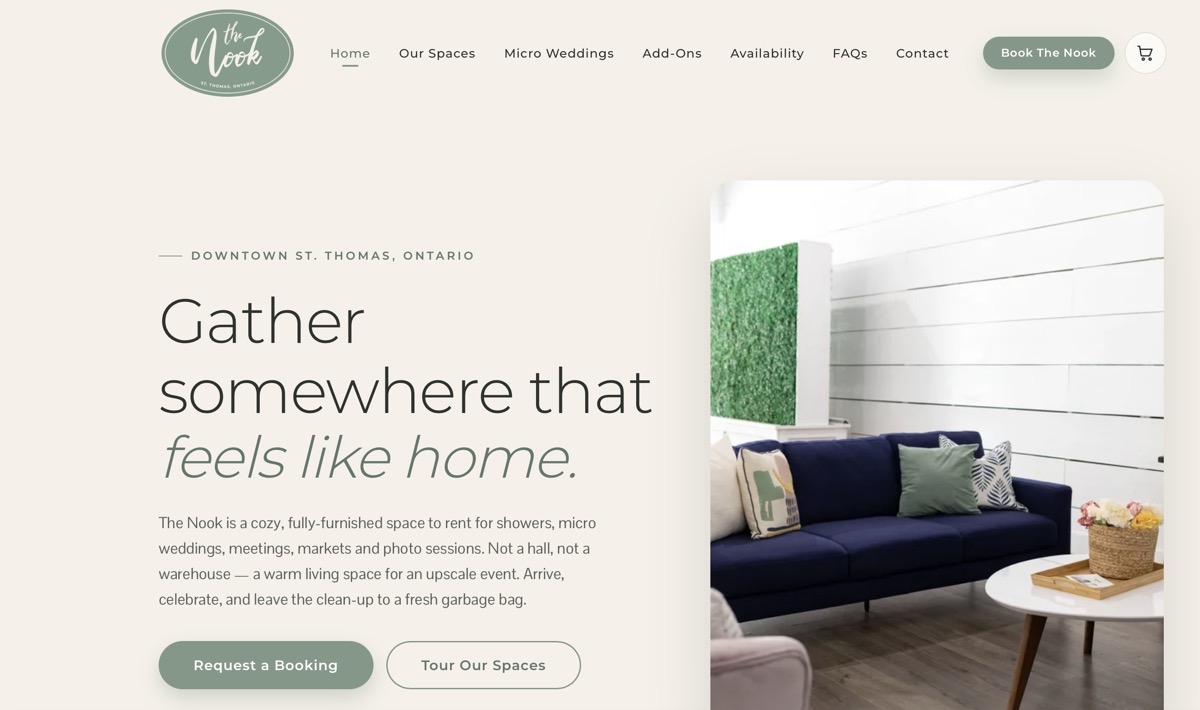
Reviewed the business web presence for The Nook — a cozy, fully‑furnished event space in downtown St. Thomas, Ontario — and rebuilt their online experience to align with their business objectives and a smoother customer buying journey, including a custom availability, request & booking flow.
Current · LiveCurrent state — the live site today at thenookstt.com.→Redesign · In reviewFuture state — the redesign, in final review & feedback. Not yet public.
Audited the existing web presence against the owner's business goals, then redesigned the experience around the customer's buying journey end to end.
Built a multi‑page site — spaces, micro‑weddings, add‑ons, FAQs — with a consistent brand system and clear calls to book.
Designed and wired a custom availability, request & booking flow so enquiries convert without back‑and‑forth.
Designed for the phone, not just resized for it: the booking path stays one tap away, and photos and FAQs reorder for on‑the‑go browsing — plus fast static hosting and SEO‑ready structure underneath.
Web DesignUXBrand SystemBooking SystemHTML / CSS / JSSEO
Web Designer & Builder · Concept Site & AI Concierge
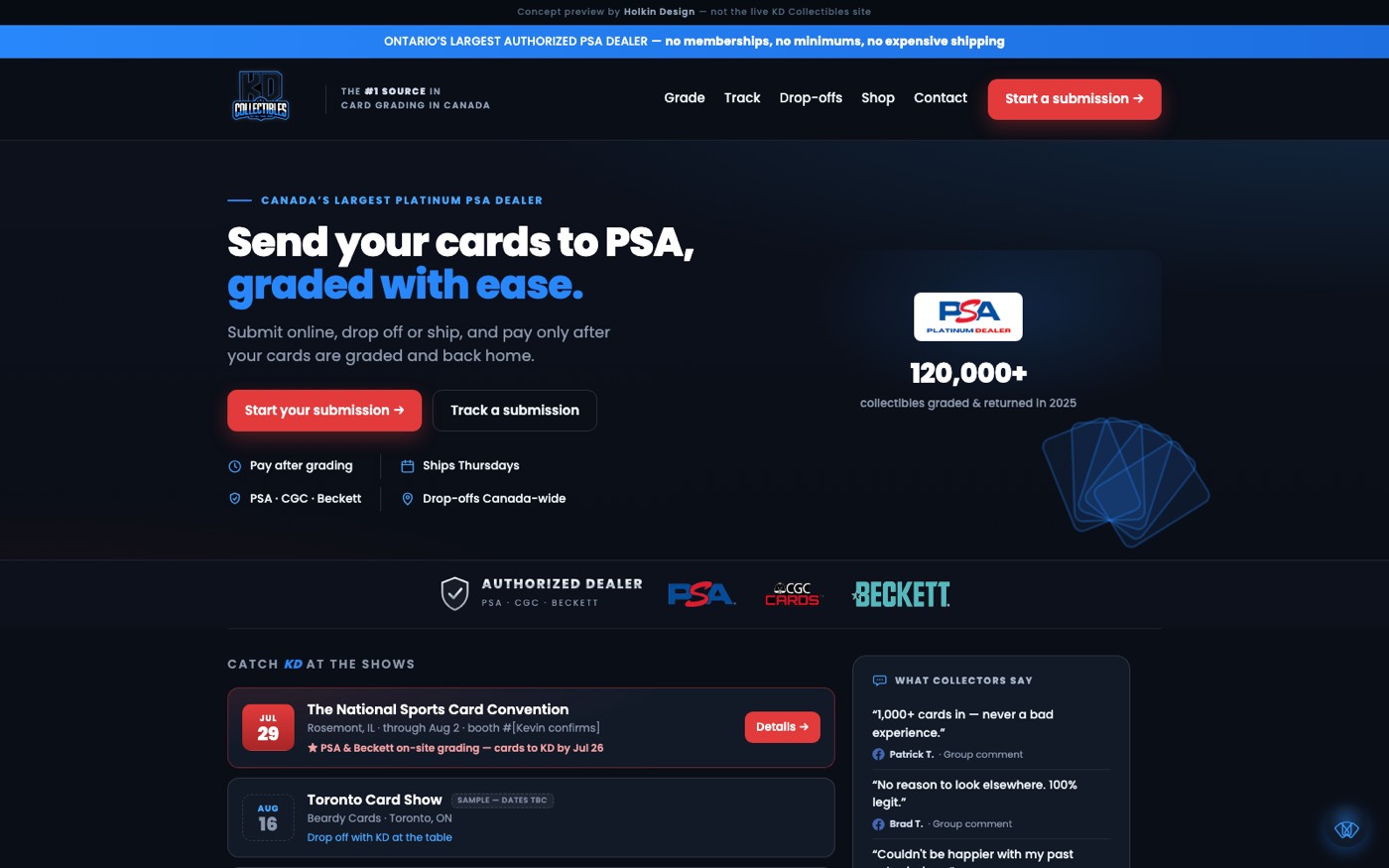
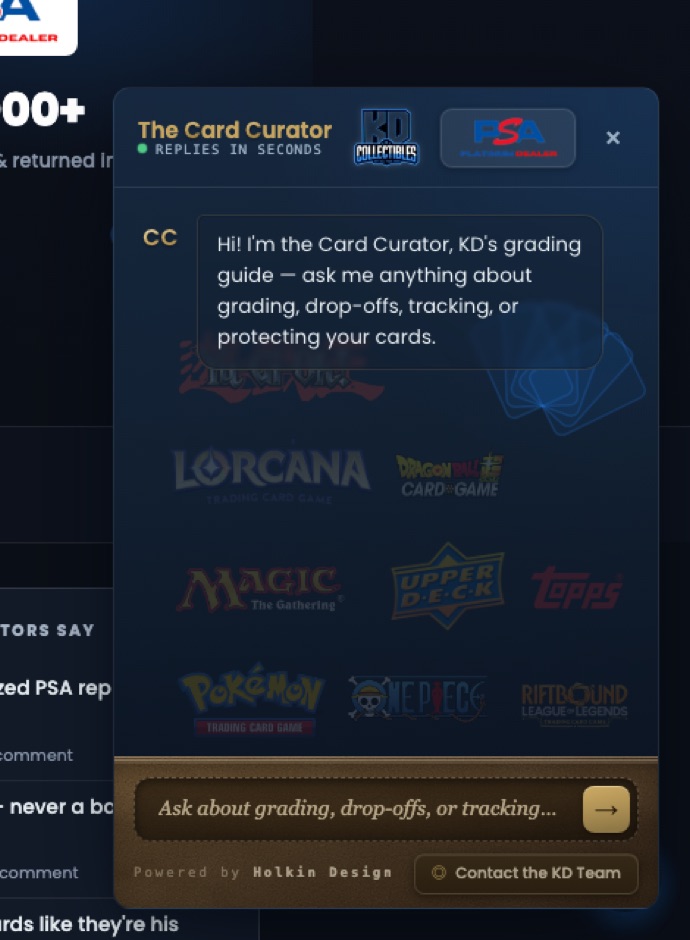
A dark, minimalist concept site + AI concierge for KD Collectibles — Canada's largest Platinum PSA dealer and an authorized PSA · CGC · Beckett grading dealer, with 120,000+ collectibles graded & returned in 2025. The Card Curator answers the where‑, how‑ and should‑I‑grade questions in the shop's voice, routes collectors to the right drop‑off, and quietly grows the business — 24/7, wrapped around KD's real submission form and store.
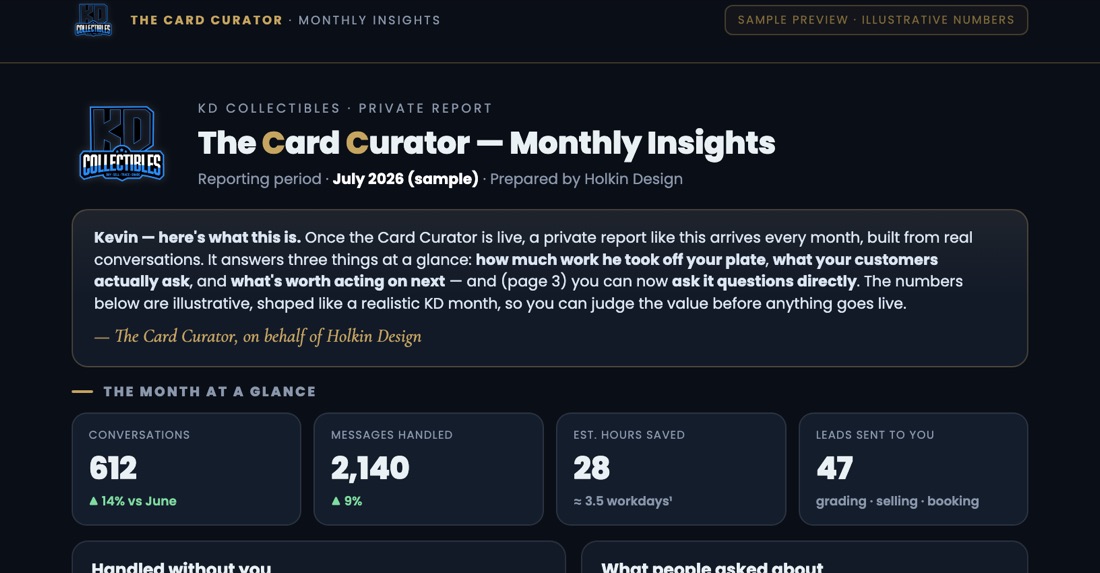
The concept home — Platinum‑dealer proof, the shows calendar, and real collector voices.The Card Curator — an antique‑gold concierge in the shop's voice, on every page.Monthly insights — the Curator reports back in plain English, and the owner can question the numbers directly.
A grading‑ROI advisor — “is this card worth grading?” — that educates on the real factors without ever quoting a price or predicting a grade.
An honest “where are my cards?” tracking playbook, taught the way the shop actually works.
A coast‑to‑coast drop‑off partner directory — brand‑true partner cards that send those shops traffic — plus a “become a drop‑off partner” funnel that positions KD as the hub.
Tasteful, contextual cross‑sell into card protection, built into both the concierge and a “Protect your investment” shelf.
Reports back to the owner — a live private dashboard plus a monthly plain‑English insights report with an embedded analyst you can question directly (“what should I focus on this month?”): after‑hours demand captured, what collectors asked, where drop‑off demand is growing, and what to act on next. The Curator doesn't just answer questions — he grows the business and proves it.
Built on the same concierge frame as Iris, dressed head‑to‑toe as KD's own — persona, gold monogram, and an aged‑leather “field journal” input tray.
Web Designer & Builder · Brand, Site & Studio Assistant
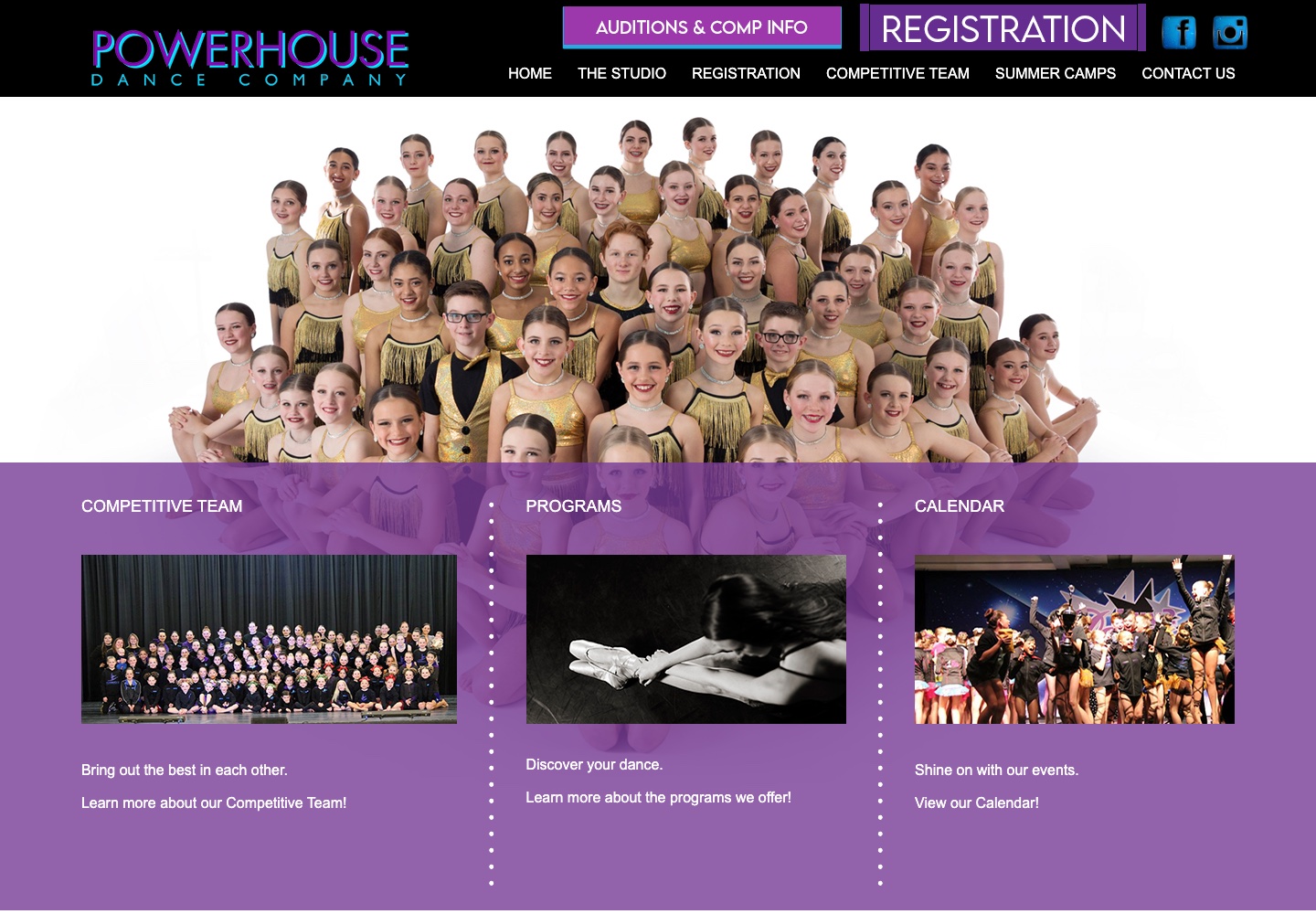
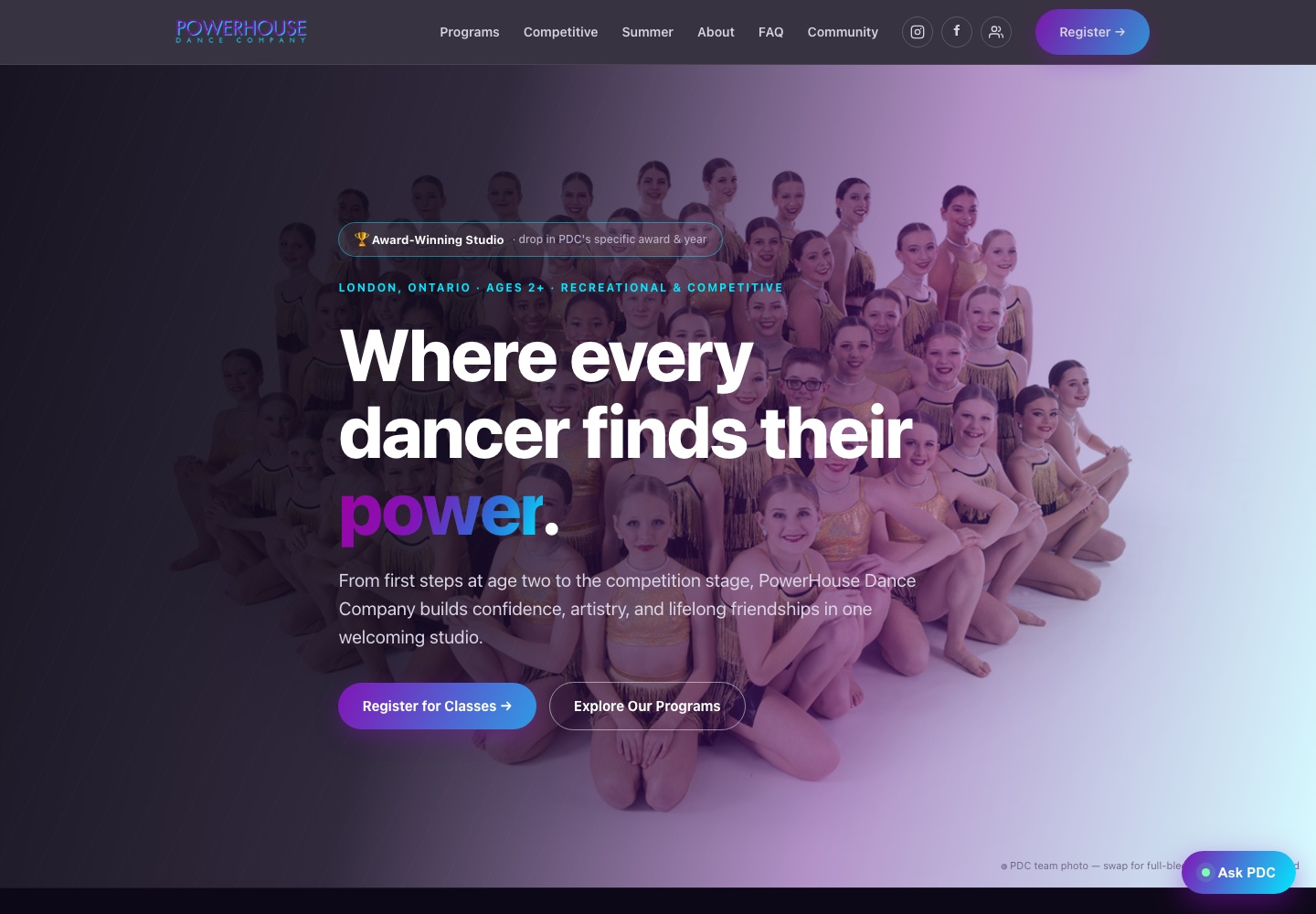
Reviewed the web presence for PowerHouse Dance Company — an award‑winning recreational & competitive studio in London, Ontario for dancers ages 2 and up — and rebuilt it into a bold, high‑energy experience that matches the studio floor, with clearer program discovery, streamlined registration, and a built‑in “Ask PDC” assistant.
Current · LiveCurrent state — the live site today at powerhousedance.ca.→Redesign · In reviewFuture state — the redesign, in review & feedback. Not yet public.
Audited the existing site against the studio's goals, then redesigned the experience mobile‑first around how families actually choose a studio.
Built a high‑energy gradient brand system with a clear hierarchy — hero, program tracks, competitive team, summer camps, and trust‑building stats.
Streamlined the path from browsing to registered — program discovery → class details → registration — with fewer clicks and dead ends.
Added an “Ask PDC” assistant that answers common questions — ages, pricing, schedules — instantly, easing repetitive email & phone load.
Tuned for trust and conversion: fast static hosting and SEO‑ready structure, so pages load instantly and show up in local search.
Web DesignUXBrand SystemRegistration FlowAI AssistantHTML / CSS / JSSEO
Designer & Builder · A living, self‑measuring page
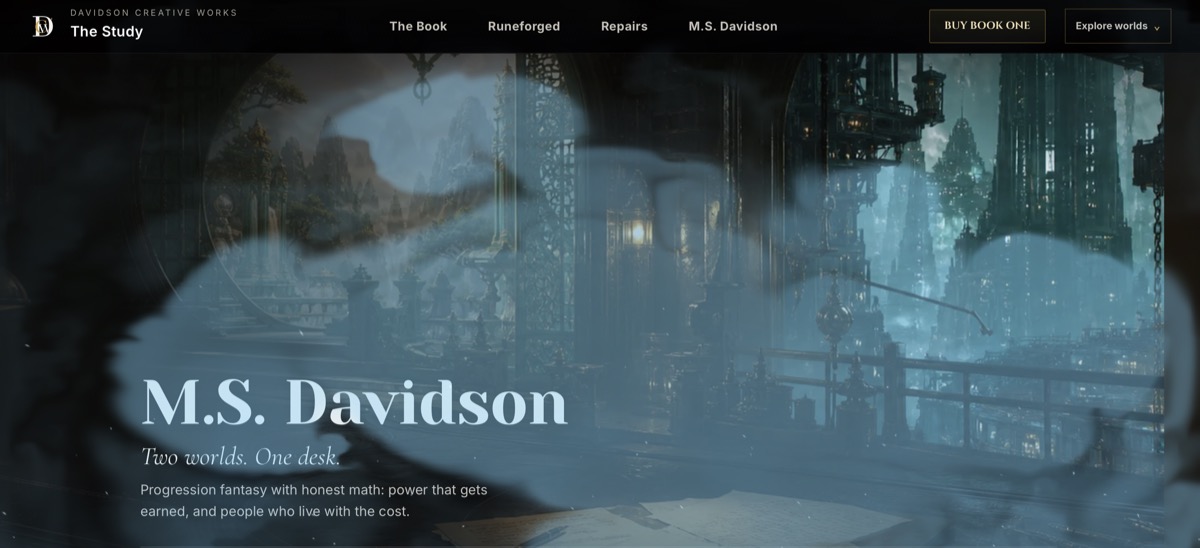
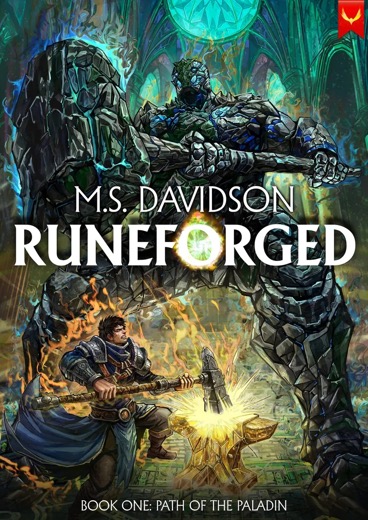
A living page for a serial novelist. M.S. Davidson writes two worlds at once — the cosmic fantasy Runeforged: Path of the Paladin and the cozy sci‑fi Rivera's Repairs — so we built him a single page that wears both: a self‑measuring "instrument" that re‑skins, re‑voices and re‑tints between his two worlds, measures its own readers first‑party, and turns a static author page into something readers can actually talk to.
Two worlds, one toggle — Ascend into Runeforged or Descend into Rivera's Repairs, and the whole page re‑skins: colors, type, labels, even the voice of the terminal.
A page that measures itself — every reading (time, attention, scroll depth, interactions) is a first‑party event, shown live and owned by the author, not a third‑party tag.
A terminal you can talk to — a working, in‑character console that answers lore questions, takes a real sign‑up, and reveals the event layer on demand.
Meticulous to the world — every word the terminal speaks was checked against the author's own text: no invented lore, no spoilers, each world kept strictly in its own language.
Built to drop in — one self‑contained page (SVG, canvas, vanilla JS — no framework), so it lands on his existing Astro/Vercel site as an island, reusing what's already loaded.
Product Manager · Global Contact Centre Technology
Ongoing · current role
Ongoing product work modernizing the voice channel across a global contact‑centre estate — 20+ centres spanning North America, CALA, APAC & EMEA — covering call routing configuration, IVR/IVA call‑flow design, and the CCaaS platform tooling that front‑line agents and callers depend on.
Product Owner of the NiCE CXone Voice Platform, supporting call‑routing configuration and IVR/IVA call‑flow journeys across global contact centres serving guests in 18+ languages.
Partners with operations, engineering, and vendors to translate business events into reliable, in‑production caller experiences.
Brings agentic and conversational AI into the contact centre responsibly — assistive, measured, and operations‑aware.
Documents releases and runs delivery with agile practices, keeping stakeholders aligned from intake to launch.
Agile DeliveryJiraServiceNowSalesforceWindows 365Microsoft Multimedia Redirection for VDI
Toolkit
Agentic AI Enablement
Product & Practice Lead · AI Tooling
Ongoing practice
A running practice of applying agentic and generative AI to real product and operations work — from copilots like Claude, ChatGPT, and Copilot for research and authoring, to directing an embedded coding agent in Cursor to build full working tools with the PM as product owner. Assistants, pipelines, and tools that earn their place in day‑to‑day delivery.
Designs AI‑assisted workflows that compress research, documentation, and authoring from days into a single session.
Directs embedded coding agents in Cursor through multi‑step builds — API integration, UI, and automated workflows across a full codebase — as product owner, not by writing code by hand.
Ships the practice as real tools — like the Product Command, which grew from an AI JIRA‑intake tool into a self‑contained Product Manager command center: intake, a live JIRA dashboard, a sprint map, health checks, and a release‑notes publisher in one portable app.
Runs a production AI concierge platform end‑to‑end — one version‑controlled frame with a per‑client configuration layer, powering multiple live concierges — Iris on this site, and client‑branded personas like the Card Curator for a collectibles shop and Wren for a real‑estate brokerage — with live dashboards, plain‑English monthly owner reports, an embedded analyst you can question, and ratings‑driven knowledge tuning.
Engineered the compliance layer once, so every deployment inherits it — accurate data‑handling disclosure, protection of required notices from being reworded or mistranslated, refusals that hold in every language the assistant answers in, and an architectural limit that means an agent cannot quote, transact, or commit the business. Proven on the hardest case: Wren, a concierge for a regulated real‑estate practice, where a wrong answer is a licensing problem rather than an awkward one.
Built a gated release pipeline that treats accuracy as a deploy blocker: the build refuses to ship when a published fact drifts from its approved source, flags facts past their review date, runs a security audit before deploy and an adversarial test after — with an independently graded red‑team suite on a schedule the system enforces.
Sets the guardrails — where AI assists, where a human decides, and how quality stays high.
Shares the practice through working documentation and reusable templates for the team.





 Play on itch.io ↗